
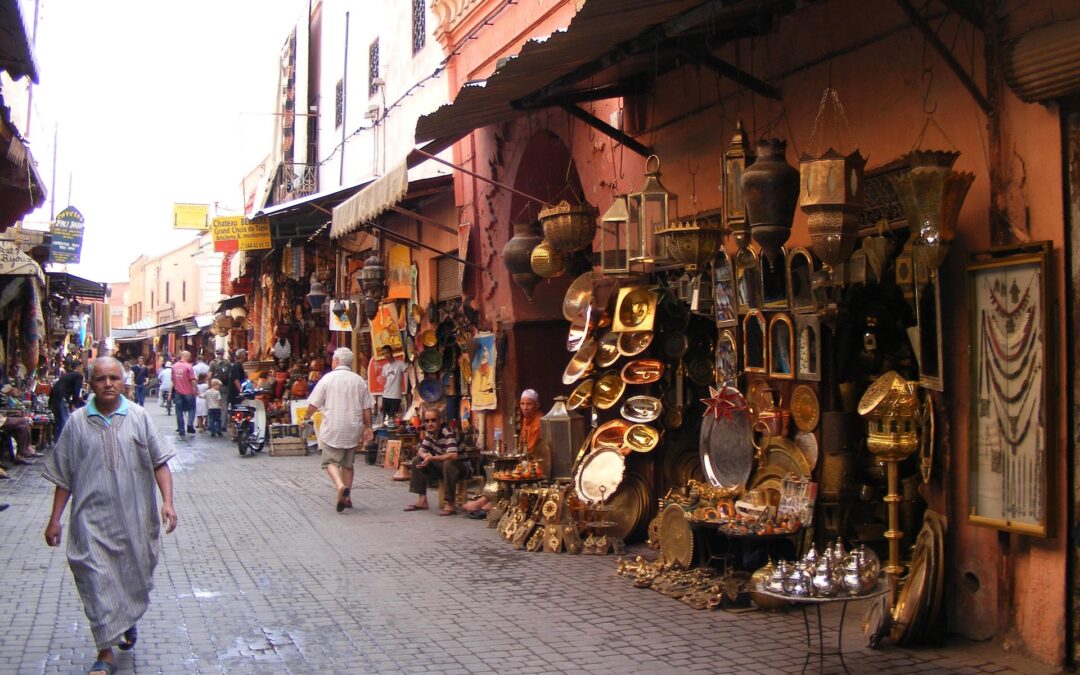
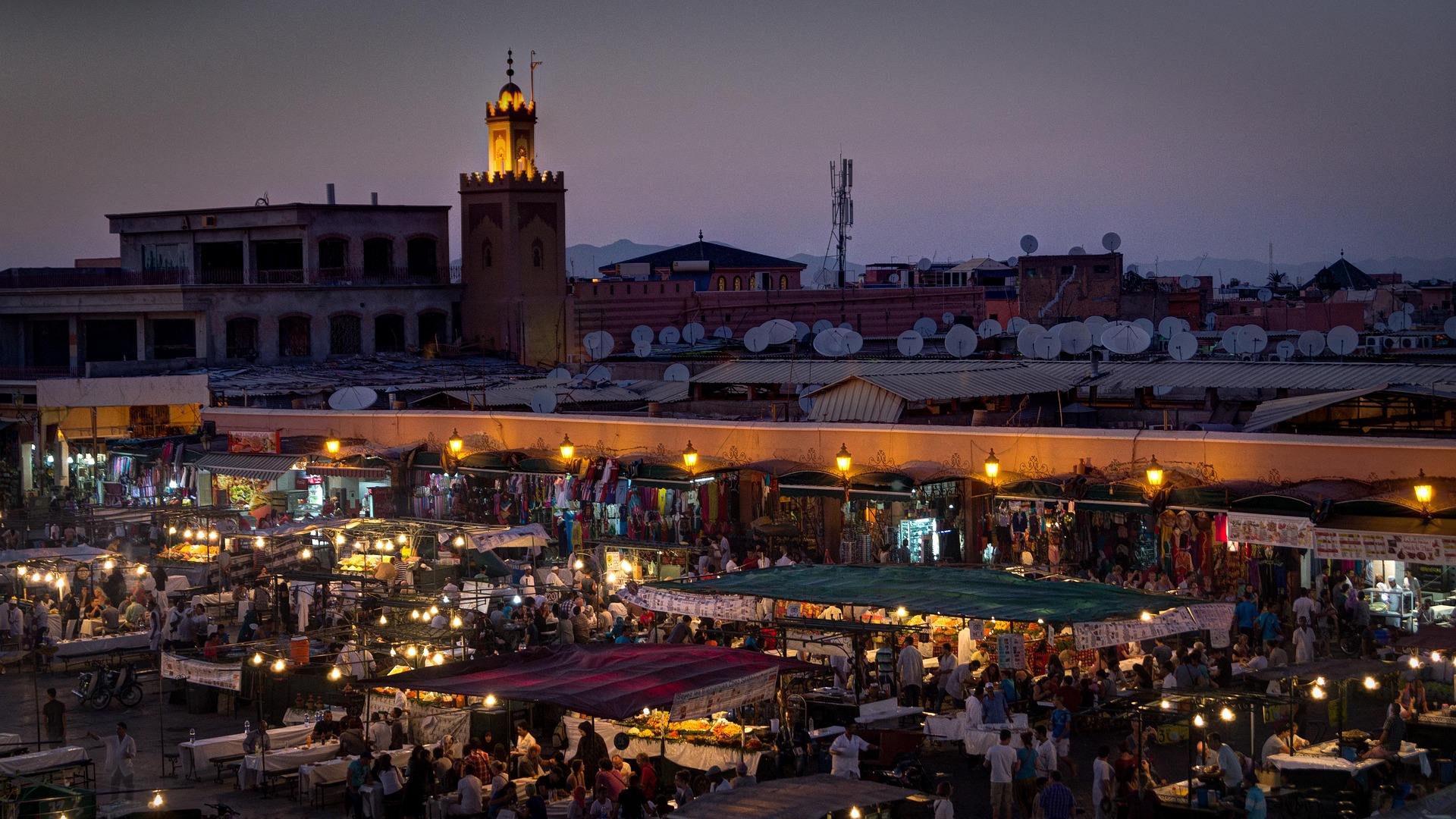
The medina of Marrakech is one of the most fascinating, vibrant, and complex traditional commercial centers in all of North Africa. Its famous souks attract thousands of visitors each year, especially in the areas surrounding the iconic Jemaa el-Fna Square, where commerce, culture, and daily life blend in a constant and exciting interplay—a spectacle that never seems to repeat itself exactly the same way twice.
*** Translated with www.DeepL.com/Translator (free version) ***
However, beyond the best-known markets—the ones most often photographed by tourists—there are other shopping areas that are much more low-key, much more authentic, and much more interesting for travelers who want to experience the city as it really is. These hidden markets in Marrakech, known only to locals, are still used primarily by the residents of the medina, who go there to buy specific products, high-quality handicrafts at fair prices, or fresh food that is part of their daily diet.
*** Translated with www.DeepL.com/Translator (free version) ***
Exploring these lesser-known markets allows you to discover a completely different side of Marrakech—one where commerce continues to operate just as it has for centuries, and where the relationship between the artisan, the merchant, and the buyer has not been distorted by mass tourism. In this article, we’ll take you through the most authentic and least-visited markets in the medina, explaining where they are, what you’ll find in each one, and why they deserve a spot on any serious visit to Marrakech.
*** Translated with www.DeepL.com/Translator (free version) ***
The Tradition of the Souks: The Economic Heart of Marrakech
To truly appreciate the hidden markets in Marrakech that only the locals know about, you first need to understand the logic behind the medina’s souk system—a logic with over a thousand years of history that remains perfectly clear today if you know where to look.
The souks of Marrakech are not simply markets in the modern sense of the word. They are a sophisticated economic and spatial organization that for centuries has divided the commercial space of the medina into specialized zones based on product type or trade. This geographic specialization had very specific practical reasons: by grouping all artisans or merchants of the same trade in the same space, buyers could easily compare prices and quality, guilds could organize and defend their collective interests, and the management of urban space was more efficient.
*** Translated with www.DeepL.com/Translator (free version) ***
The Difference Between the Tourist Souk and the Local Souk
Throughout the 20th century, and especially since the tourism boom of recent decades, a significant portion of Marrakech’s souks has undergone a profound transformation: high-quality handmade goods intended for local use have been gradually replaced by mass-produced souvenirs aimed at tourists; prices no longer reflect the products’ true value but rather foreign visitors’ willingness to pay; and the shopping experience has become an almost theatrical spectacle. But this transformation has not reached every corner of the medina. The markets described below are those that have best withstood this pressure and remain, to a greater or lesser extent, authentic commercial spaces where locals are the primary customers.
*** Translated with www.DeepL.com/Translator (free version) ***
Souk Haddadine: The Blacksmiths’ Market and the Sound of Metal
One of the hidden markets in Marrakech, known only to the most authentic locals throughout the medina, is the Souk Haddadine, whose name literally means “blacksmiths’ market” in Arabic. This market, which stretches along a network of narrow alleys in the northern part of the medina, is traditionally dedicated to iron and metalwork in all its forms and applications.
When you enter the Souk Haddadine, the first thing you notice isn’t a sight but a sound: the constant, almost hypnotic rhythm of hammers striking metal on anvils. This sound, mingling with the screech of files, the hiss of the blowtorch, and the creak of the forges’ bellows, creates a soundtrack completely different from that of the tourist souks, where the dominant sound is usually that of vendors calling out to tourists.
*** Translated with www.DeepL.com/Translator (free version) ***
Ironworkers: An Ancient Craft in Action
The artisans working in the Souk Haddadine produce an extraordinarily wide range of items: wrought-iron lamps with geometric designs influenced by Islamic art, window grilles and balustrades for the houses in the medina, door hardware, kitchen utensils, agricultural tools, and a myriad of everyday items that medina residents continue to buy here because the quality of the craftsmanship and the prices are far superior to those of any industrial alternatives.
*** Translated with www.DeepL.com/Translator (free version) ***
What makes a visit to this market especially worthwhile is that the work done here isn’t intended as a spectacle for tourists. The artisans work with the focus and efficiency of those who have orders to fulfill and customers to serve, and that authenticity is immediately apparent and rubs off on visitors who have the humility and curiosity to observe without interrupting.
Souk Sebbaghine: The Colors of Traditional Dyeing
Just a few minutes’ walk from the Souk Haddadine lies another of Marrakech’s hidden markets, known only to locals, that is truly fascinating from both a visual and cultural standpoint: the Souk Sebbaghine, the historic dyers’ market.
For centuries, the master dyers of Marrakech mastered the art of coloring fabrics and threads using pigments extracted from natural sources: saffron for yellow, indigo for blue, henna for orange and reddish tones, pomegranate for browns, and a variety of other plants, minerals, and organic substances, the knowledge of which was passed down from master to apprentice through oral instruction and hands-on training. This knowledge was a closely guarded trade secret that gave the best dyers considerable economic power.
*** Translated with www.DeepL.com/Translator (free version) ***
A heritage of craftsmanship that stands the test of time
Although activity at the Souk Sebbaghine has declined considerably compared to its heyday, the place still retains a completely unique historical and visual atmosphere. The skeins of freshly dyed wool and silk hanging from clotheslines above the market’s narrow alleys, drying in the sun and wind, create extraordinarily photogenic compositions of color. The clay pots used to prepare the dye baths, with their intensely pure colors, possess an almost painterly beauty. And the small textile workshops, where artisans still work using techniques that have remained fundamentally unchanged for centuries, offer a window into a past that has completely vanished in most parts of the world.
*** Translated with www.DeepL.com/Translator (free version) ***
Rahba Kedima: The Spice and Traditional Medicine Market
Rahba Kedima, popularly known as the Spice Square, is one of Marrakech’s hidden markets known only to locals—and it’s the one that surprises visitors the most when they discover it, because the variety and nature of the products sold here go far beyond conventional culinary spices.
The square opens up unexpectedly among the narrow streets of the medina as a relatively spacious and bright area surrounded by shops displaying their wares in an explosion of colors, textures, and aromas that is hard to describe. There are spices of all kinds, from cumin and cilantro to ras el hanout, that blend of up to twenty-seven spices which is the most characteristic seasoning of Moroccan cuisine. But there are also medicinal herbs used in traditional Moroccan medicine to treat everything from headaches to digestive problems; mysterious-looking roots and barks whose uses are known only to the healers and herbalists who sell them; natural cosmetics such as henna and kohl; and a bewildering variety of other products that are part of everyday life and Moroccan popular culture.
*** Translated with www.DeepL.com/Translator (free version) ***
A market that reflects the essence of Moroccan culture
What makes exploring Rahba Kedima so worthwhile is that the products sold here aren’t souvenirs designed to appeal to tourists. They are items that Moroccans in the medina actually use in their daily lives, and that authenticity of use gives the market a cultural and anthropological dimension that no tourist souk can offer. Talking with the vendors about the uses of the various products—if you’re lucky enough to find someone willing to explain them—is one of the most eye-opening experiences the medina has to offer.
*** Translated with www.DeepL.com/Translator (free version) ***
Souk Zrabi: The Art of Moroccan Rugs
The Souk Zrabi is the traditional hub for buying and selling Moroccan rugs in the medina of Marrakech, and although some shops in the market cater to tourists, the heart of the trade here remains focused on local buyers and middlemen who supply stores throughout the city.
The rugs found at Souk Zrabi come from very different regions of Morocco, each with its own aesthetic traditions, weaving techniques, and symbolic meanings. The Berber rugs of the High Atlas, woven by women from Amazigh communities using wool from their own flocks and featuring designs that are essentially a symbolic language of geometric motifs with specific meanings, are perhaps the most highly prized by connoisseurs. Beni Ourain rugs, with their characteristic combination of a creamy white background and geometric motifs in black or dark brown, have become highly sought-after items in the international interior design world in recent years. Kilim rugs, woven using a flat, pile-less technique, possess a lightness and versatility that make them very popular for everyday use.
*** Translated with www.DeepL.com/Translator (free version) ***
How to Buy an Authentic Rug in Marrakech
Buying a rug at the Souk Zrabi is an experience that requires time, patience, and some prior knowledge. The traditional process involves the seller laying out dozens of pieces for the buyer to examine, explaining the origin, technique, and age of each one, while tea is served and a conversation unfolds that can last for hours. Bargaining is an integral part of the process and should not be viewed as a confrontation but rather as a social ritual with its own rules and its own unique charm.
*** Translated with www.DeepL.com/Translator (free version) ***
Souk Smata: Slippers and the Art of Leatherwork
The Souk Smata is a market specializing in the sale of babouches—those heel-less leather slippers that are one of the most recognizable symbols of Moroccan craftsmanship and that the inhabitants of the medina have continued to wear as everyday and festive footwear for centuries.
The shops in Souk Smata display their merchandise in a way that resembles an art installation: hundreds and hundreds of pairs of slippers hanging from the walls, stacked on shelves all the way to the ceiling, and arranged on the floor in neat rows by color and style create a visual spectacle of great chromatic beauty. The yellow of the traditional men’s styles, the white of the formal styles, and the red, green, blue, and orange of the more elaborate women’s styles come together to form a color palette that is irresistible to any photography lover.
*** Translated with www.DeepL.com/Translator (free version) ***
Leather from Marrakech: A Centuries-Old Artisanal Tradition
The highest-quality babouches sold at the Souk Smata are made from leather processed in the traditional tanneries of Marrakech, which are closely related to the famous tanneries of Fez but less well-known internationally. The process of tanning and dyeing leather is one of the oldest and most unchanging aspects of Moroccan craftsmanship, and the result is a material of such softness, durability, and beauty that no industrial leather can match.
*** Translated with www.DeepL.com/Translator (free version) ***
Practical Tips for Exploring Marrakech’s Hidden Markets
Discovering the hidden markets in Marrakech that only the locals know about requires a different mindset and preparation than a typical tourist visit.
How to Get Around and Conduct Yourself in Local Markets
The first tip is the most important: take your time and don’t stick to a set itinerary. The hidden markets in Marrakech aren’t marked on tourist maps and aren’t always easy to find. Getting lost is part of the experience, and the best discoveries usually happen when you turn a corner without knowing exactly where it leads. Having an offline map of the area downloaded on your phone helps you find your way without losing that sense of exploration.
*** Translated with www.DeepL.com/Translator (free version) ***
The second tip concerns behavior: in markets frequented mainly by locals, a respectful and discreet attitude is absolutely essential. Asking permission before photographing artisans at work, not interrupting a transaction between a vendor and a local customer, and showing genuine interest in the products and crafts—rather than treating the market like a theme park—are behaviors that make the difference between an enriching experience and an intrusion that benefits no one.
*** Translated with www.DeepL.com/Translator (free version) ***
Beyond the most famous and crowded souks surrounding Jemaa el-Fna Square, the medina of Marrakech hides markets known only to locals that remain a fundamental part of the city’s economic and cultural life. From the metal workshops of Souk Haddadine to the vibrant colors of Souk Sebbaghine, from the aromas of Rahba Kedima to the rugs of Souk Zrabi or the slippers of Souk Smata, each of these markets offers a window into a Marrakech that is more authentic, more complex, and more fascinating than what conventional tourist circuits reveal.
*** Translated with www.DeepL.com/Translator (free version) ***
Exploring these places with curiosity, respect, and plenty of time is one of the best ways to understand why Marrakech has been, for a thousand years, one of the most important and vibrant commercial cities in the Arab world and North Africa.
Did you already know about any of these hidden markets in Marrakech, or have the souks you’ve visited so far been the more touristy ones? Which of these local markets do you think would be the most interesting to explore on your next visit? Let us know in the comments.
Explore Marrakech's Hidden Markets Like a True Local
Discover the hidden markets in Marrakech that only the locals know about and delve into the most authentic side of the medina. From traditional blacksmiths’ and dyers’ workshops to markets selling spices, Berber rugs, and handmade babouches, enjoy a unique cultural experience off the beaten path. Explore secret alleyways, learn about ancient Moroccan crafts, and connect with the true historical and commercial essence of Marrakech.
*** Translated with www.DeepL.com/Translator (free version) ***
Frequently Asked Questions
Where are the hidden markets in Marrakech that only the locals know about?
Most are located within the medina, off the main tourist routes near Jemaa el-Fna.
Which authentic market should I visit in Marrakech to see traditional artisans?
Souk Haddadine is one of the best places to watch blacksmiths and artisans working using traditional methods.
Is Rahba Kedima still an authentic market?
Yes, Rahba Kedima maintains a strong connection to local life and the traditional sale of spices, herbs, and natural products.
Where can I buy authentic rugs in Marrakech?
The Souk Zrabi is one of the best-known markets for Berber rugs and traditional handicrafts.
Are traditional slippers expensive in Marrakech?
It depends on the quality of the leather and the craftsmanship, although prices at local markets tend to be more reasonable than in tourist areas.
When is the best time to explore the hidden markets of Marrakech?
The early morning hours offer a more peaceful and authentic experience within the medina.
Connect with Morocco’s rich Amazigh culture.
Every trip can help preserve ancient traditions and strengthen local communities.
Travel with purpose, support Amazigh culture, and contribute to responsible tourism. Plan your authentic experience today.

