
Celebrating Eid al-Fitr in Morocco: A Complete Guide, Authentic Tips, and Cultural Experiences
What does Eid al-Fitr mean in Morocco?
Eid al-Fitr is one of the most important celebrations in the Islamic calendar. It marks the end of the holy month of Ramadan, a period of fasting, spiritual reflection, personal discipline, and community solidarity. In Morocco, Eid al-Fitr—also known as “^Aïd es-Sghir”^ or the “small feast” in contrast to Eid al-Adha—plays a central role not only as a religious holiday but also as a cultural event deeply rooted in social, family, and community life.
In this in-depth blog post, we’ll explore every aspect of how Eid al-Fitr is celebrated in Morocco—from its religious significance to practical tips for travelers, culinary traditions, and activities that will help you experience this holiday in an authentic and respectful way.
The Origin and Religious Significance of Eid al-Fitr
The End of Ramadan: Spiritual Significance
Eid al-Fitr is celebrated on the first day of the month of Shawwal, immediately following the fasting month of Ramadan. For millions of Muslims around the world, this day symbolizes spiritual triumph through fasting, patience, and self-control, as well as a renewed commitment to the faith.
During Ramadan, believers fast from dawn until sunset, strive to improve their moral conduct, and devote themselves to more prayer, reading the Quran, and acts of charity. Eid al-Fitr marks the culmination of all these efforts: a time of joy, gratitude, and family togetherness.
In Morocco, as in other Muslim countries, this holiday is a community event during which mosques, squares, and public spaces fill with worshippers who gather for prayers and celebrations.
Eid al-Fitr on the Islamic calendar: when it is celebrated
The exact date of Eid al-Fitr depends on the sighting of the new moon. The day the crescent moon is sighted marks the official start of Shawwal and, consequently, Eid al-Fitr. In Morocco, this announcement is typically made through official statements by religious authorities based on local moon sightings, sparking anticipation and celebration throughout the country.
This difference in the sighting of the moon may mean that Eid al-Fitr is celebrated a day earlier or later than in other countries, which makes the occasion even more special for those who are traveling or have family in other parts of the world.
Preparations for Eid al-Fitr in Morocco
Spiritual purification and acts of charity
In the days leading up to Eid al-Fitr, it is traditional for Moroccan families to perform acts of charity known as “zakat al-fitr.” This is a mandatory donation given before the Eid prayer with the aim of purifying the believer and helping those most in need to celebrate the holiday.
Zakat al-Fitr typically consists of basic foodstuffs such as dates, flour, or an equivalent amount of money, and giving it before Eid is a meaningful spiritual act. This gesture reflects the value of social solidarity, which is central to the celebration of Eid al-Fitr.
This tradition spiritually prepares the community for the holiday and strengthens social bonds, especially in neighborhoods and communities where families gather to share food and experiences.
Buying new clothes and getting the house ready
A widespread custom in Morocco is to wear new clothes for Eid al-Fitr. Families visit the souks (traditional markets) and local shops to buy djellabas, caftans, babouches, and elegant outfits for all members of the family.
Preparing the home is also part of the celebration: many families decorate their homes, clean their living spaces, and set aside special areas to welcome guests, as Eid al-Fitr is a time for hospitality and family gatherings.
For travelers, exploring the souks in the days leading up to Eid is a fascinating cultural experience that offers a glimpse into everyday Moroccan life and a chance to discover traditional textiles, handicrafts, and festive colors.
Preparar la gastronomía tradicional
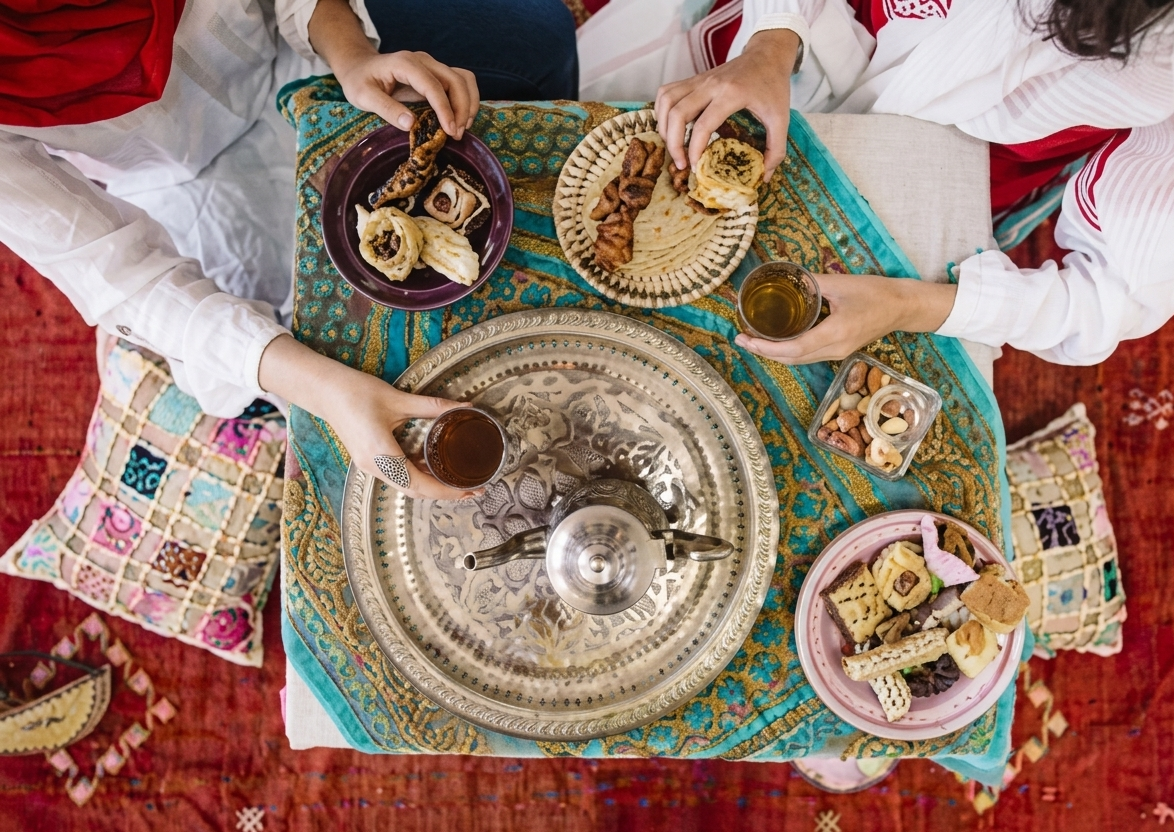
Moroccan cuisine during Eid al-Fitr is one of the most memorable parts of the celebration. Families gather to prepare special dishes that aren’t eaten every day. Among them are:
- Chebakia: a fried pastry coated in honey and sprinkled with sesame seeds, traditionally made during Ramadan and also eaten on Eid.
- Seffa: a sweet couscous dish with cinnamon, almonds, and sugar.
- Briouats: fried pastries filled with almonds or spiced meat.
- Harira: a traditional soup that can be served before prayers or as part of family meals.
Taking part in the preparation or tasting of these dishes offers a deep insight into Moroccan culinary culture, and many travelers find these dishes to be a unique sensory experience.
Traditions and Activities During Eid al-Fitr
The Eid Community Prayer
The morning of Eid al-Fitr begins with the Eid prayer, a communal prayer held in mosques and open spaces. In cities such as Marrakech, Fez, and Casablanca, the prayer brings together thousands of worshippers in public squares and historic mosques.
Attending these prayers is an intense and solemn experience. Although most people come for religious reasons, many respectful travelers attend to observe and better understand the spiritual significance of the festival. The atmosphere is one of fellowship, peace, and shared celebration.
For those traveling in Morocco during this time of year, it is important to observe the rules of conduct: dress modestly, maintain a respectful attitude, and, in general, follow the instructions of the locals.
Family visits and Moroccan hospitality
After the prayer, it is customary for families to visit one another to share meals, exchange good wishes, and give sweets to the children. The concept of hospitality in Morocco runs deep: visitors are welcomed with tea and sweets, and on some occasions, are even invited to join the family meal.
This spirit of hospitality is reflected in the friendliness of the people and the festive atmosphere in the streets and squares. For travelers, these encounters can become unforgettable memories, provided they participate with respect and consideration for local customs.
Markets, bazaars, and public festivals
During Eid al-Fitr, traditional markets (souks) in cities and towns come alive with colors, scents, and activity. Vendors offer special items for the holiday: fabrics, perfumes, jewelry, handicrafts, and traditional foods.
In many communities, there are public events, cultural performances, and food stalls that make the atmosphere even more festive. Exploring these markets offers a deep immersion into everyday Moroccan life and provides great photo opportunities (always ask for permission before taking photos of people).
Practical Tips for Travelers
Plan your trip in advance
The Eid al-Fitr season is very popular in Morocco, and many families travel to visit relatives or explore the country. This means that hotels, transportation, and services may be in high demand. That’s why it’s advisable to:
- Book your accommodation several weeks or months in advance.
- Buy train or bus tickets in advance.
- Check for any potential restrictions on appointments or services during the holidays.
Cultural Respect and Etiquette During Eid
If you’re traveling to Morocco during Eid al-Fitr, it’s essential to respect local customs. This includes:
- Modest attire: clothing that covers the shoulders and legs, especially when visiting mosques or attending religious events.
- Ask for permission before taking photographs, especially of people or religious ceremonies.
- Avoid behavior that might be perceived as disrespectful, such as loud gestures or inappropriate comments.
- Participate respectfully, without imposing yourself; being a respectful observer is always valuable.
Safety and authentic experiences
Morocco is generally a safe country for tourists, but during holidays such as Eid al-Fitr, crowds can grow and some areas may be more crowded. To make the most of your trip:
- Keep your belongings safe in crowded places.
- Follow the instructions of staff or locals when attending large events.
- If you’re looking for structured activities, join in on experiences organized by local communities or trusted guides.
Best Places to Celebrate Eid al-Fitr in Morocco
Marrakech: Where Tradition Meets Modernity
Marrakech is one of the most vibrant cities in which to experience Eid al-Fitr. Its historic mosques, squares like Jemaa el-Fna, and souks offer a vibrant blend of tradition and urban life.
During Eid, Jemaa el-Fna Square comes alive with families celebrating, street vendors, musicians, and activities for children. Nearby mosques draw worshippers for morning prayers, and the palaces and gardens fill with visitors.
For travelers, Marrakech offers both authentic experiences and more tourist-oriented options, so it’s important to balance your stay with meaningful cultural activities and explore beyond the typical sights.
Fez: Spirituality and Ancient Art
Fez is known as the spiritual and cultural capital of Morocco. Its ancient medinas, labyrinthine streets, and artisanal traditions make it an ideal place to experience Eid al-Fitr in a more traditional setting.
The Great Mosque of Fez draws thousands of worshippers for Eid prayers, and the surrounding areas fill with families sharing meals, sweets, and souvenirs. Artisan workshops and traditional souks offer a rich cultural experience throughout the day.
Casablanca and other major cities
Casablanca, a modern and cosmopolitan city, also celebrates Eid al-Fitr with great enthusiasm. Although the atmosphere may feel more urban than traditional, the Hassan II Grand Mosque and its surroundings become key gathering places for communal prayers.
Other cities, such as Rabat and Tangier, also host significant celebrations, each with its own style and cultural nuances.
Experience Eid al-Fitr in Morocco in an authentic way
Celebrating Eid al-Fitr in Morocco is much more than just a religious holiday: it’s an opportunity to connect with the spirituality, hospitality, cuisine, and cultural traditions of a country rich in history and diversity.
From dawn prayers to family meals, bustling markets, and the warmth of the people, every aspect of Eid al-Fitr in Morocco offers a unique experience. If you travel with respect, curiosity, and cultural sensitivity, you’ll be able to enjoy not only the celebrations but also a deep immersion in Moroccan life.
Experience and Celebrate Eid al-Fitr in Morocco the Authentic Way
Discover the magic of celebrating Eid al-Fitr in Morocco and immerse yourself in its traditions, cuisine, and unique culture. From communal prayers to family gatherings and bustling markets, enjoy an unforgettable cultural experience. Plan your trip and connect with the authentic spirit of Morocco.
Frequently Asked Questions
What is Eid al-Fitr, and when is it celebrated in Morocco?
Eid al-Fitr, also known as the “Festival of Breaking the Fast,” marks the end of the holy month of Ramadan. It is celebrated on the first day of the month of Shawwal according to the Islamic calendar, depending on the sighting of the new moon. In Morocco, religious authorities officially announce the exact date, and families prepare with celebrations and communal prayers.
How is Eid al-Fitr celebrated in Morocco?
The celebration begins with Eid prayers in mosques and open spaces, followed by family gatherings, traditional meals, the exchange of sweets and gifts, and visits to neighbors and friends. Markets and souks are filled with traditional foods, new clothes, and handicrafts. It is a time of spirituality, solidarity, and shared joy.
What traditional foods are eaten during Eid al-Fitr in Morocco?
Some of the most popular dishes include:
- Chebakia: a fried sweet treat with honey and sesame seeds
- Seffa: Sweet couscous with cinnamon and almonds
- Briouats: fried pastries filled with meat or almonds
- Harira: a traditional soup served at family meals
These dishes reflect the richness of Moroccan cuisine and are a central part of the celebration.
What should I wear to celebrate Eid al-Fitr in Morocco?
It is recommended to wear traditional or at least modest clothing: men should wear djellabas, and women should wear caftans or clothing that covers their shoulders and legs. In mosques and at religious events, it is important to respect local customs and avoid flashy or overly revealing clothing.
Es seguro viajar a Marruecos durante Eid al‑Fitr?
Yes, Morocco is generally safe for tourists, but during Eid, crowds can be large at mosques and markets. We recommend:
- Keep your belongings safe
- Avoid areas that are too crowded
- Participate in activities organized by reliable guides
Respecting local customs also helps ensure a safe and authentic experience.
Connect with Morocco’s rich Amazigh culture.
Every trip can help preserve ancient traditions and strengthen local communities.
Travel with purpose, support Amazigh culture, and contribute to responsible tourism. Plan your authentic experience today.

