
Guide to Moroccan Cuisine: Discover Flavors, Dishes, and Culinary Culture
Why Moroccan Cuisine Is Special
Moroccan cuisine is vibrant, aromatic, and deeply rooted in culture, reflecting centuries of history, trade, and cultural exchange. Located at the crossroads of Africa, Europe, and the Middle East, Moroccan cuisine combines Arab, Berber, Andalusian, Mediterranean, and Sub-Saharan influences.
From slow-cooked tagines to fluffy couscous and traditional mint tea served with warm hospitality, Moroccan food is more than just a meal—it’s an experience of community, celebration, and tradition. In this guide, we’ll explore traditional Moroccan dishes, street food, desserts, drinks, and culinary experiences—both to prepare at home and to enjoy during your trip.
Understanding Moroccan Culinary Culture
Moroccan cuisine centers on hospitality and sharing. Family meals, communal dining, and the symbolic value of food are central to Moroccan culture. In addition, the cuisine is seasonal, using fresh ingredients from the local market.
The Heart of Moroccan Flavor: Spices and Ingredients
A defining characteristic of Moroccan cuisine is its use of spices and aromatics. Spice blends (called ras el hanout) can contain up to 20 different spices and vary depending on the cook or region.
Main Moroccan spices and ingredients:
- Cumin — warm, earthy, essential in tagines and soups
- Paprika — slightly spicy, rich color
- Turmeric — golden color, mild flavor
- Saffron — distinctive aroma and color
- Cinnamon — used in sweet and savory dishes
- Ginger and garlic — the aromatic base of many sauces
- Canned lemons — intense sour and salty flavor
- Olive oil — plentiful and locally produced
These spices, combined with fresh herbs and local ingredients, create the aromatic and complex flavors that make Moroccan cuisine unforgettable.
Traditional Moroccan Dishes You Must Try
Here are Morocco’s most iconic dishes that every traveler and food lover should know about.
Tagine: Morocco’s Most Famous Dish
Tagine is one of Morocco’s most recognizable dishes. The name refers both to the earthenware pot in which it is cooked and to the stew it contains.
Key Features:
- Slow cooking over low heat
- A combination of savory and sweet flavors
- Tender meats (lamb, chicken, beef) with vegetables, dried fruit, or olives
Popular variants:
- Chicken with Canned Lemons and Olives
- Lamb with Plums and Almonds
- Veal with Dates and Cinnamon
Slow cooking allows the flavors to blend, resulting in a rich and aromatic dish.
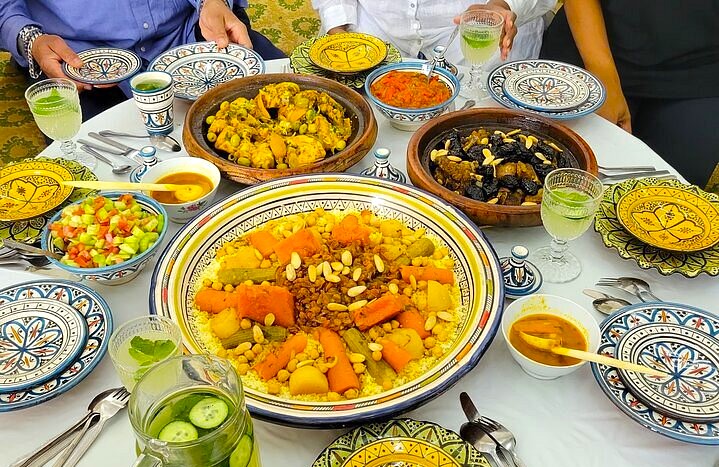
Couscous: Morocco’s National Dish
Couscous isn’t just a dish—it’s a symbol of hospitality and celebration. It is traditionally served on Fridays and at family gatherings, accompanied by a vegetable and meat stew.
Tips for enjoying it:
- Traditionally, people eat with their right hand
- It is usually served with chickpeas and a rich broth
- Sometimes raisins or caramelized onions are added
Couscous is light yet filling, and it is the centerpiece of a Moroccan feast.
Pastilla (Bastilla): Sweet and Savory Cake
Pastilla is one of Morocco’s most elegant dishes. It harmoniously combines sweet and savory flavors.
Main ingredients:
- Thin, crispy sheets of dough
- Pigeon or chicken stuffing
- Almonds, eggs, and aromatic spices
- Dusted with powdered sugar and cinnamon
This dish is served at weddings and special occasions, showcasing the creativity of Moroccan cuisine.
Harira: A Comforting Soup
Harira is a traditional soup made with tomatoes, lentils, chickpeas, and meat. It is especially popular during Ramadan as a meal to break the fast, although it is also enjoyed year-round.
Its thick texture and intense flavors make it a comfort food.
Mechoui: Slow-Roasted Lamb
Mechoui is a whole lamb roasted slowly until the meat falls off the bone. Seasoned with salt and cumin, it is a traditional dish served at family celebrations and banquets.
Guide to Moroccan Street Food
Morocco has a vibrant street food culture, full of flavors and affordable options.
B’stilla Sandwich
A street-style version of the pastilla, stuffed with chicken or pigeon, spices, and herbs, served in crispy bread—perfect for eating on the go.
Msemen and Beghrir: Moroccan Pancakes
- Msemen: A square, flaky pancake
- Beghrir: A fluffy pancake with a honeycomb-like texture
They are usually served with honey and butter.
Sfenj: Moroccan Donuts
Fried and sprinkled with sugar, sfenj are crispy on the outside and soft on the inside, served with mint tea.
Kefta Skewers
Seasoned ground meat (beef or lamb) on grilled skewers—juicy and flavorful—perfect as a snack.
Moroccan Beverages: Mint Tea and More
Moroccan Mint Tea
Mint tea, known as “Moroccan whiskey” because of its cultural significance, is served throughout the day and symbolizes hospitality.
Preparation:
- Green tea (usually gunpowder)
- Fresh mint leaves
- Sugar to taste
- High-level pouring for foam
Other Popular Beverages
- Amlou: Argan, almond, and honey paste
- Freshly squeezed orange juice
- Café Maure: Strong coffee with cardamom
Moroccan Desserts and Sweets
Chebakia
A fried dessert shaped like a flower, coated in honey and sesame seeds, typically eaten during Ramadan.
Gazelle Horns (Kaab el Ghzal)
Delicate pastries filled with almond paste and orange blossom water—sweet and fragrant.
Cakes (Sfouf)
A sweet mixture of toasted flour, almonds, sesame seeds, and honey, served at celebrations.
How to Cook Moroccan Food at Home
Essential Ingredients
- Ras el hanout
- Cumin, paprika, turmeric, cinnamon
- Canned lemons
- Olive oil
- Couscous, lentils, chickpeas
- Fresh herbs: parsley, cilantro, mint
Easy Recipes
- Chicken Tagine with Preserved Lemons and Olives
- Brown the chicken
- Add onion, garlic, and spices
- Add canned lemons and olives
- Simmer until tender
- Classic Couscous with Vegetables
- Steaming Couscous
- Make a stew with carrots, zucchini, and chickpeas
- Mix and serve with broth
Culinary Experiences in Morocco
Visit to the Souks and Markets
Explore the markets in Marrakech, Fez, and Casablanca to see spices, fresh produce, and street food.
Cooking Classes
Many riads and schools offer classes on how to make tagine, couscous, and traditional pastries.
Food Tours
Guided tours that showcase hidden gems, street food, and local favorites.
Etiquette and Tips for Dining in Morocco
Traditional Label
- Eating with the right hand
- Taking off your shoes in traditional areas
- Wait for the host’s invitation to begin
Dietary Considerations
- Most of the food is halal
- Vegetarian options available; please ask about broths and sauces
Discover Moroccan Cuisine and Enjoy a Unique Experience
Explore the authentic flavors of Morocco through its traditional dishes, spices, and culinary experiences. From sampling a tagine in the medina to participating in local cooking classes, enjoy an unforgettable culinary journey. Plan your adventure and immerse yourself in Moroccan culture through its cuisine.
Experience Morocco Through Its Food
Moroccan cuisine combines aroma, flavor, history, and community. From tasting your first tagine to sipping mint tea in a medina or cooking at home, Moroccan food invites you to discover its culture and traditions. Use this guide as a map and let each dish tell its own story.
Frequently Asked Questions About Traditional Moroccan Music and Dance
What is the most popular Moroccan dish?
Tagine and couscous are the most iconic.
Is Moroccan food spicy?
No, the spice is aromatic, not hot like chili peppers.
Can you find food for special diets?
Yes, there are vegetarian and halal options
Connect with Morocco’s rich Amazigh culture.
Every trip can help preserve ancient traditions and strengthen local communities.
Travel with purpose, support Amazigh culture, and contribute to responsible tourism. Plan your authentic experience today.

