
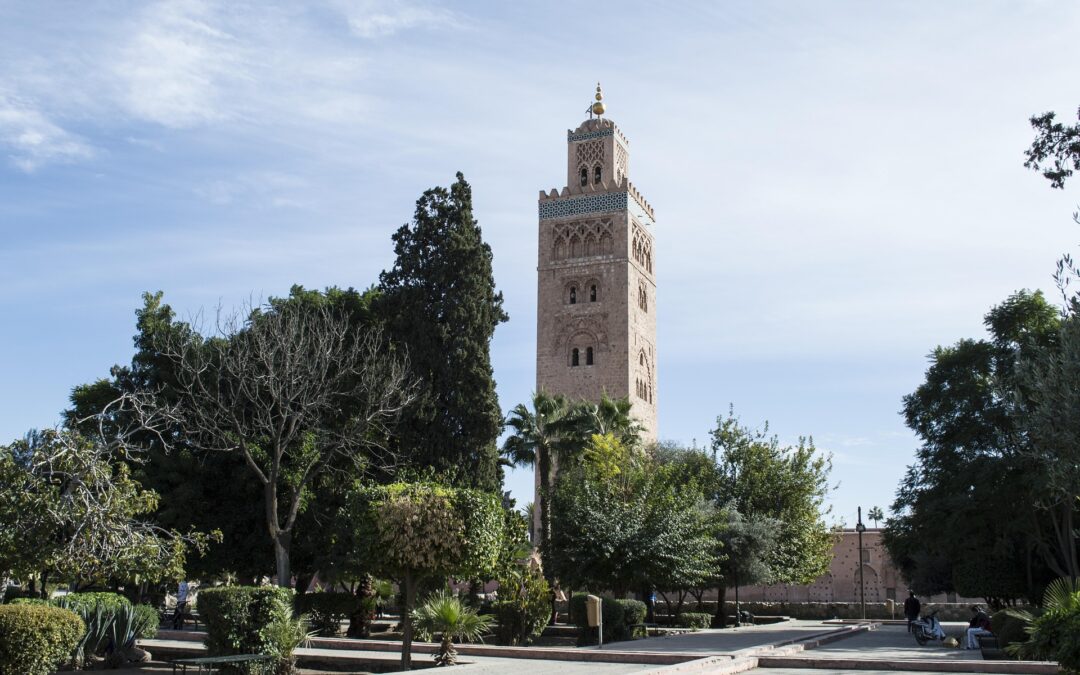
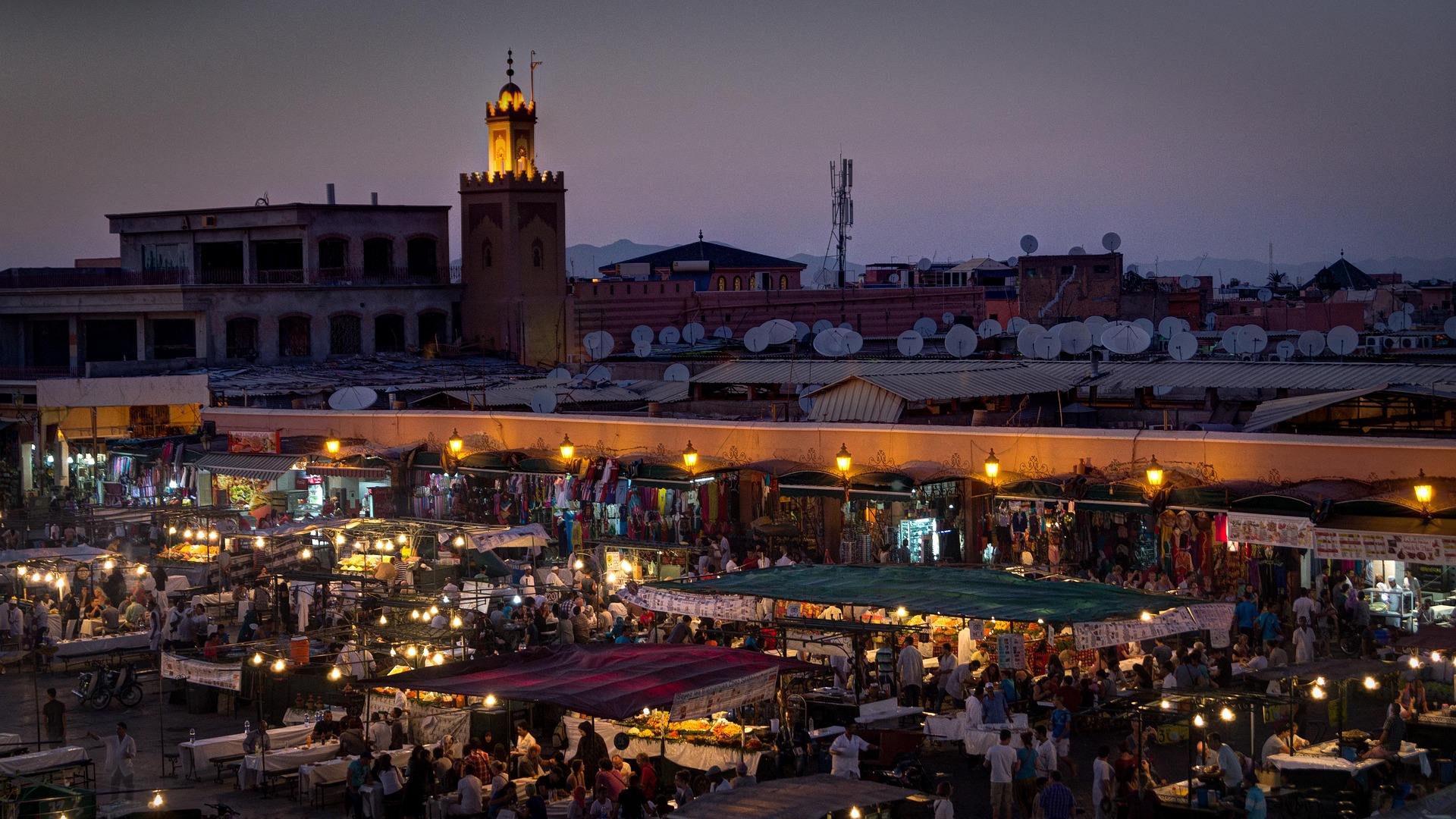
The medina of Marrakech is famous worldwide for its vibrant energy, its souks teeming with life, and its perpetually bustling streets that never seem to rest. Places like Jemaa el-Fnaa Square draw thousands of visitors every day with their hypnotic mix of traditional music, street food, snake charmers, and acrobats who fill the air with sounds and colors from dawn until well into the night.
However, beyond the busiest and most photographed areas, the medina also has a completely different side—a quiet side that most travelers never get to know because they simply don’t know where to look for it. Among courtyards hidden behind unassuming doors, historic gardens lovingly restored, quiet alleyways where you hear only your own footsteps, and museums housed in ancient palaces that invite leisurely contemplation, there are places where the pace of Marrakech slows down and where you can discover a profoundly different side of this extraordinary city.
*** Translated with www.DeepL.com/Translator (free version) ***
Exploring the quiet side of Marrakech’s medina allows you to experience the city from a perspective that complements and enriches the experience of the souks and street performances. Far from the tourist bustle and closer to the city’s history, architecture, and spirituality, these peaceful corners offer some of the most memorable moments Marrakech has to offer a curious and observant traveler.
Historic gardens tucked away in the heart of the medina
One of the best-kept secrets of the Marrakech medina is its historic gardens. These green spaces, which often go completely unnoticed by visitors rushing from one souk to another, offer an unexpected and much-needed respite amid the labyrinth of streets, buildings, and markets that form the heart of the old city.
Le Jardin Secret: An Oasis of Serenity in the Heart of the Medina
Located in the heart of the medina, just a few steps from the busiest souks yet in a completely different world in terms of atmosphere and ambiance, Le Jardin Secret is one of the most peaceful and beautiful places to escape the noise and frenetic pace of the nearby streets. This historic complex, dating back to the 16th century and exemplary restored in recent years, offers a glimpse into what the private gardens of the great Moroccan palaces were like during the Saadian era.
*** Translated with www.DeepL.com/Translator (free version) ***
The garden is organized around two different aesthetic concepts that coexist harmoniously. The traditional Islamic garden, with its Andalusian-inspired geometric flowerbeds, central fountains, and precisely pruned fruit trees, embodies a philosophy that views the garden as a representation of paradise on earth—a space of order, beauty, and spiritual contemplation. The exotic garden, added in the 19th century, features plants brought from different parts of the world that the owners of the time—fascinated by international botany—wished to bring together in this special setting.
*** Translated with www.DeepL.com/Translator (free version) ***
The fountains, whose constant murmur fills the air with a sound that is almost instantly relaxing; the paths shaded by palm and orange trees; the elegant architecture of the pavilions flanking the garden; and the quality of the dining all create an atmosphere of serenity that contrasts almost theatrically with the hustle and bustle of the streets just a few meters beyond its walls. Visiting Le Jardin Secret is one of those moments in Marrakech that travelers didn’t expect but later remember as one of the most special of their entire trip.
*** Translated with www.DeepL.com/Translator (free version) ***
Historic courtyards where time seems to have stood still
Beyond the gardens, the medina of Marrakech conceals a series of historic courtyards within its most important buildings, which are among the most peaceful and beautiful spaces in the entire city. These courtyards, designed as the organizing heart of the buildings that house them, possess a special quality of silence and beauty that invites visitors to pause and look closely.
The Ben Youssef Madrasa: Architecture and Spirituality
The Ben Youssef Madrasa is, without a doubt, one of the most impressive monuments in the entire medina of Marrakech and one of the places where the tranquil side of the Marrakech medina is most palpable and moving. This former Koranic school, founded in the 14th century and rebuilt in its current form in the 16th century by the Saadian sultan Abdallah al-Ghalib, served for centuries as Marrakech’s most important intellectual and spiritual center, hosting hundreds of students who came from all over the Maghreb to study theology, Islamic law, mathematics, and astronomy.
*** Translated with www.DeepL.com/Translator (free version) ***
The central courtyard of the madrasa is so beautiful that it is difficult to describe in words. The perfect proportions of the space, the central pond reflecting the sky, and the arches surrounding it, the walls covered all the way to the ceiling—with zellige tiles at the bottom, stucco sculpted with infinitely detailed arabesques in the middle, and cedar wood carved with geometric motifs at the top—create a composition of such richness and harmony that many visitors simply stand motionless for several minutes, trying to take in everything they are seeing.
*** Translated with www.DeepL.com/Translator (free version) ***
The Bahía Palace: Gardens and Palace-Like Serenity
The Bahia Palace, built in the second half of the 19th century by Grand Vizier Ahmed ben Moussa, is another place where you can fully experience the tranquil side of the Marrakech medina. This palace, whose name literally means “the brilliant one,” was conceived as the most sumptuous residence of its time in Marrakech, and its interior gardens, porticoed courtyards, and rooms decorated with the finest craftsmanship available at the time remain today one of the most impressive palatial complexes in the entire country.
*** Translated with www.DeepL.com/Translator (free version) ***
The gardens of the Palacio Bahía, with their orange trees and neatly trimmed hedges, their white marble pavements, and their unobtrusive fountains, possess a sense of tranquility and coolness that feels almost miraculous during the summer months. Walking through these gardens first thing in the morning, when there are hardly any visitors and the light streams obliquely through the trees, is an experience that stays with you forever.
*** Translated with www.DeepL.com/Translator (free version) ***
Museums and galleries in historic former residences
Within the medina, there are also museums and cultural venues housed in former residences and palaces that retain a peaceful, elegant atmosphere conducive to leisurely contemplation and cultural discovery.
The Marrakech Museum: Art and History in a Palace
Located in the Mnebhi Palace, a stunning residence built in the late 19th century, the Marrakech Museum skillfully combines historic architecture with collections of contemporary and traditional Moroccan art, offering insight into the richness and diversity of the country’s artistic creation.
The building itself is perhaps the museum’s greatest attraction. Its central courtyard, covered by a glass dome and crowned by a monumental bronze chandelier—one of the most impressive examples of craftsmanship in Marrakech—creates a spacious, light-filled, and surprisingly quiet space that invites visitors to pause and calmly observe all the architectural details around them. Unlike the nearby markets and streets, the atmosphere here is unhurried and serene, allowing visitors to enjoy both the collections and the architecture with a level of focus that is difficult to maintain in the city’s more crowded spaces.
*** Translated with www.DeepL.com/Translator (free version) ***
Alleyways and less-traveled neighborhoods in the medina
One of the best ways to discover the quiet side of the Marrakech medina is also the simplest and most accessible: simply step off the main routes and venture into the residential neighborhoods that stretch beyond the major tourist thoroughfares.
While the souks near Jemaa el-Fna—the souks of the dyers, leather artisans, and spice vendors—are always bustling with visitors and the intense energy that characterizes Moroccan markets, there are entire neighborhoods within the medina where the atmosphere changes radically. In these areas, the life unfolding in the streets is the real daily life of the medina’s permanent residents, not a life geared toward tourism.
*** Translated with www.DeepL.com/Translator (free version) ***
Authentic Life in Residential Neighborhoods
In these quiet neighborhoods of the medina, you can watch artisans at work in tiny workshops where there is barely enough room to move, but where the skill and concentration they bring to their craft are absolutely fascinating. Blacksmiths hammering metal with a hypnotic rhythm, carpenters working cedar wood with tools that haven’t changed in centuries, and weavers creating rugs on looms that fill the entire room—they are all part of a living artisanal tradition that has completely disappeared in many cities around the world but remains an everyday reality in the medina of Marrakech.
*** Translated with www.DeepL.com/Translator (free version) ***
The small neighborhood mosques, which sound the call to prayer five times a day without anyone seeming particularly bothered by it; the community bakeries where neighbors bring their dough to be baked in the communal oven; the public fountains decorated with zellige where children stop to drink on their way to school: all these elements create a tapestry of daily life that is extraordinarily enriching for the traveler who has the curiosity and patience to seek it out.
*** Translated with www.DeepL.com/Translator (free version) ***
Quiet riads: the private oases of the medina
The quiet side of the Marrakech medina also takes on a very special character in the riads—those traditional houses built around an interior courtyard that are the city’s most distinctive form of residential architecture and that, in recent years, have become one of the most sought-after and highly regarded types of accommodations for travelers visiting Morocco.
A traditional riad is, at its core, a machine for creating tranquility. Its design—with rooms opening onto the inner courtyard and a completely solid exterior façade—is intended to keep the noise and bustle of the street from penetrating the interior. The result is that even a riad located just a few meters from the busiest souks in the medina can have an interior that is almost supernaturally calm and cool.
*** Translated with www.DeepL.com/Translator (free version) ***
Cafés in riads: must-visit cultural stops
Several riads in the medina have been converted into cafés and cultural spaces that are open to all visitors, allowing them to enjoy the architecture and atmosphere of a traditional riad without having to stay there. Riad Yima, created by Moroccan artist Hassan Hajjaj, is one such space, where visitors can sit in a courtyard decorated with Moroccan pop art and enjoy a cup of tea in a truly unique setting that blends tradition and modernity in completely unexpected and delightful ways.
*** Translated with www.DeepL.com/Translator (free version) ***
The Early Morning Hours: The Gift of Silence
The quiet side of the Marrakech medina also has a temporal dimension that many travelers don’t take full advantage of: the early morning hours, when the sun has just risen and most tourists are still having breakfast in their riads or hotels.
During these early hours of the day, between approximately 6:00 and 8:30 a.m., the streets of the medina have a completely different atmosphere than during the busiest hours. Shopkeepers are setting up their stores, arranging their merchandise with a calm and meticulousness they won’t have time to display during the day. Vendors selling freshly baked bread make their way through the narrow streets with their trays, filling the air with one of the most comforting scents in the world. Cats—which are ubiquitous in Marrakech and as much a part of the urban landscape as palm trees and minarets—roam freely through the still-nearly-deserted streets.
*** Translated with www.DeepL.com/Translator (free version) ***
The medina at dawn: a unique experience
Getting up early to explore the medina before the tourist crowds arrive is one of the best pieces of advice you can give to someone visiting Marrakech for the first time. The light of dawn over the rooftops of the medina, the sound of the day’s first call to prayer echoing from the minarets, the silence that still reigns in the streets—all of this creates an experience of such authenticity and beauty that it stands in stark contrast to the Marrakech of midday and afternoon, allowing you to see the city through a completely different lens.
*** Translated with www.DeepL.com/Translator (free version) ***
Tips for Finding the Quiet Side of the Medina
For travelers who want to explore the quiet side of Marrakech’s medina in a deliberate and effective way, there are a few strategies and practical tips that can make the difference between finding those peaceful spots and getting lost in the crowd.
When and How to Get Around the Quiet Medina
The most important factor is timing. Visiting the gardens, museums, and historic courtyards first thing in the morning, right when they open, guarantees a much more peaceful and satisfying experience than visiting them during the middle of the day. Consciously steering clear of the main tourist hubs—especially the area around Jemaa el-Fna and the large themed souks—and venturing into the residential neighborhoods to the north and east of the medina is another highly effective strategy. And finally, getting around on foot and at a leisurely pace—without a set itinerary and without the pressure to see everything listed in the guidebooks—is the approach that most often leads to the most unexpected and memorable discoveries.
*** Translated with www.DeepL.com/Translator (free version) ***
Discovering the tranquil side of Marrakech’s medina is one of the most enriching experiences this extraordinary city has to offer a traveler willing to go beyond the obvious. Beyond the bustling souks and the famous Jemaa el-Fna Square—which are undoubtedly must-sees—there are hidden gardens, historic courtyards of breathtaking beauty, residential neighborhoods where daily life unfolds with an authenticity that no tourist spectacle can replicate, and moments of the day when the medina reveals a completely different and utterly fascinating side.
*** Translated with www.DeepL.com/Translator (free version) ***
For travelers seeking a balance between exploring the vibrant side of the city and seeking out its serene side, these peaceful places offer a unique and deeply fulfilling way to connect with the history, culture, and true spirit of Marrakech.
Have you already discovered any of these quiet spots in the medina of Marrakech, or has the city only shown you its most intense and bustling side so far? Which of these peaceful places would you like to explore on your next visit? Let us know in the comments.
Discover the Quiet Side of Marrakech's Medina
Explore the most serene and authentic side of Marrakech among hidden gardens, historic courtyards, traditional riads, and quiet alleyways far from the hustle and bustle of the souks. Discover a different side of the medina, full of culture, architecture, and peaceful corners that reveal the calmest and most fascinating essence of Morocco’s “Red City.”
Frequently Asked Questions
What are the quietest spots in the medina of Marrakech?
Le Jardin Secret, the Ben Youssef Madrasa, the Bahia Palace, and some traditional riads are considered among the most peaceful places in the medina.
What's the best time to discover the quiet side of Marrakech?
The early morning hours are ideal for exploring the medina when there are fewer tourists and the atmosphere is much more relaxed.
Is Le Jardin Secret in Marrakech worth a visit?
Yes, it is one of the most beautiful and serene historic gardens in the medina of Marrakech.
Are there any less touristy areas within the medina?
Yes, several residential neighborhoods away from Jemaa el-Fna offer a more authentic and peaceful experience.
What quiet riads can you visit in Marrakech?
Some riads also serve as cafés and cultural spaces open to the public, offering quiet courtyards and traditional architecture.
Is the Ben Youssef Madrasa a peaceful place to visit?
Yes, especially in the morning, when its historic courtyard has a very calm and contemplative atmosphere.
How can you discover the most authentic side of the medina in Marrakech?
The best way is to walk at a leisurely pace, explore side streets, and visit gardens, historic courtyards, and traditional riads off the beaten path.
Connect with Morocco’s rich Amazigh culture.
Every trip can help preserve ancient traditions and strengthen local communities.
Travel with purpose, support Amazigh culture, and contribute to responsible tourism. Plan your authentic experience today.

