
Traditional Moroccan Music and Dance: A Cultural Journey
The Heartbeat of Moroccan Culture
Morocco’s traditional music and dance are the rhythmic heart of its culture, reflecting centuries of history, identity, and spiritual connection. From the hypnotic percussion of Gnawa music to the refined melodies of Andalusian music, these rhythms convey stories of community, spirituality, and celebration.
In this comprehensive guide, you’ll discover:
- The Origins and Evolution of Moroccan Music and Dance
- The Main Musical Styles and Genres
- The traditional instruments that bring the rhythms to life
- How Music Is Integrated Into Festivals, Rituals, and Everyday Life
- Where to Experience These Traditions on Your Trip to Morocco
What Makes Moroccan Music and Dance Unique
Moroccan music and dance are complex and expressive art forms, shaped by:
- Cultural diversity: Arab, Berber, African, Andalusian, and Mediterranean influences.
- Geographical diversity: from the Atlas Mountains to the coast and the Sahara Desert.
- Spiritual traditions and social life: Each region has its own rituals and celebrations.
This mosaic creates a multi-layered soundscape capable of telling stories of identity, resilience, spirituality, daily life, and celebration.
The Historical Roots of Moroccan Music
Moroccan music reflects centuries of cultural exchange and spirituality:
Pre-Islamic Influences
The Berber (Amazigh) communities developed music linked to rituals, agriculture, and oral storytelling before any external influences.
Andalusian Influence
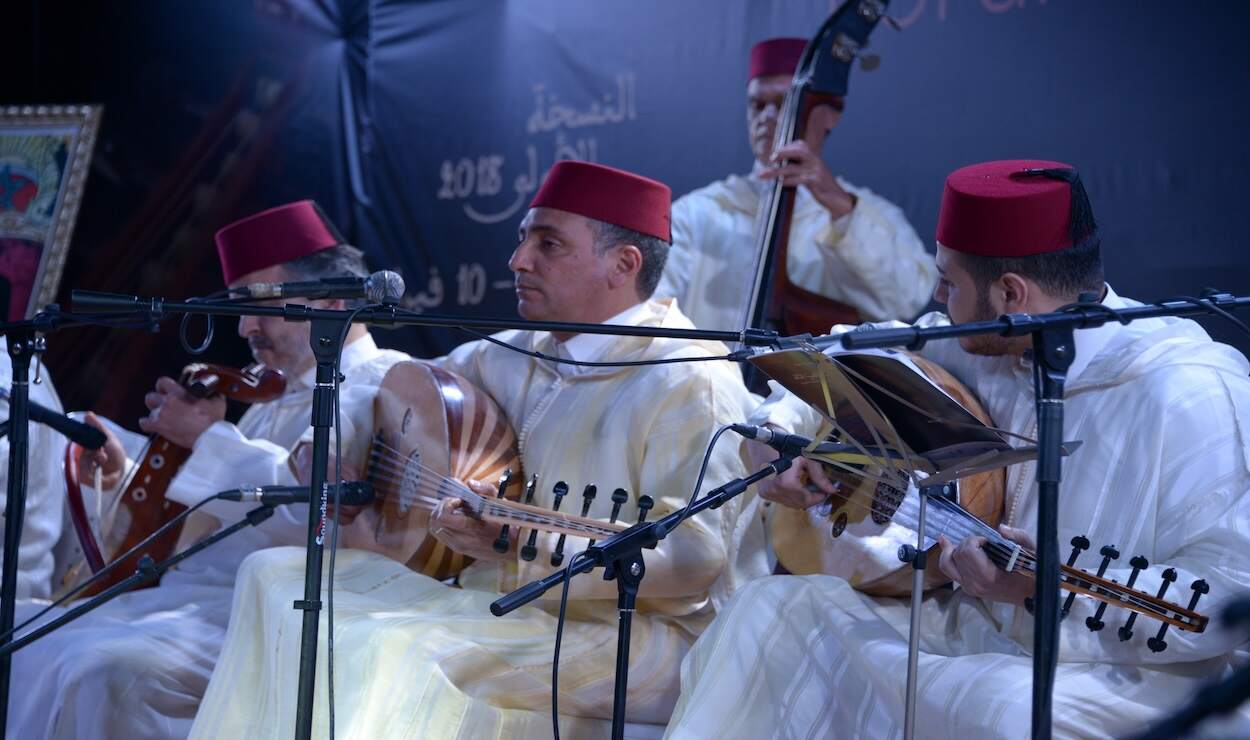
After the fall of Al-Andalus, Muslim and Jewish musicians migrated to Morocco, bringing with them the refined and structured Andalusian music that would become one of the country’s most prestigious traditions.
Sub-Saharan Traditions
Trans-Saharan trade brought African rhythms and spiritual music, such as Gnawa, which combines percussion, singing, and trance.
French and Spanish Influence
During the colonial period, new instruments were introduced and musicians were exposed to European styles, which influenced the creation of modern genres such as Chaabi.
Major Musical Traditions in Morocco
Gnawa Music — Rhythms of the Soul
Originating from the descendants of Sub-Saharan Africans, Gnawa music combines spirituality, trance, and healing.
Características:
- Call-and-response song
- Intense percussion
- Low-pitched string instrument: guembri
- Ritual ceremonies: lila or derdeba
Where to listen to it:
- Festival anual Gnaoua World Music Festival en Essaouira
- Street performances and private rituals in Marrakech and Casablanca
Andalusian Classical Music — Elegance and Tradition
Originally from medieval Spain, he migrated to Morocco after the fall of Al-Andalus.
Características:
- Musical suites called noubas
- Orchestral ensembles
- Poetic and Refined Lyrics
Where it’s spoken: Fez, Rabat, Meknes
Berber (Amazigh) Music
Linked to celebrations, agriculture, and local rituals.
Elements:
- Pentatonic scales
- String instruments
- Rhythmic songs
Featured Regions: Rif, Middle Atlas, and High Atlas
Chaabi — Moroccan Folk Music
Upbeat, festive music, often played at weddings and celebrations.
Características:
- Danceable rhythms
- Modern and synthesized instruments
- Vernacular Scripts
Malhun — Sung Poetry
A poetic tradition with a strong vocal, philosophical, and emotional emphasis.
Where: Fez, Marrakesh, Casablanca
Traditional Moroccan Dance Styles
1 Ahidous — Berber Circle Dance
- Region: Middle and Upper Atlas
- Formation: a circle with synchronized steps and clapping
- Meaning: unity and celebration
2 Ahouach — Group Dance
- Region: Souss
- Form: group singing, percussion, choreographed routines
- Meaning: an expression of community and local stories
3 Gnawa Dance Rituals
- Trance-inducing movement
- Community and Spiritual Participation
- Colorful costumes and healing ceremonies
Iconic Musical Instruments
- Guembri/Sintir: a 3-string bass, central to Gnawa music
- Qraqeb/Krakebs: metal Gnawa percussion castanets
- Oud: a traditional lute used in Andalusian music
- Bendir: frame drum
- Bouzouki & Mandolin: Features in Chaabi and Modern Fusion
Music and Dance at Moroccan Festivals
- Gnaoua World Music Festival (Essaouira): Gnawa, jazz, blues, and international fusion
- World Sacred Music Festival (Fez): Spiritual Music and Interfaith Dialogue
- Folk Arts Festival (Marrakech): Berber dances and folk music
Discover Live Traditional Moroccan Music and Dance
Immerse yourself in the authentic rhythms of Morocco and enjoy an unforgettable cultural experience. From Gnawa ceremonies to traditional festivals, explore unique journeys where music and dance come to life. Plan your adventure and connect with the cultural soul of Morocco in an authentic and exciting way.
Best Places to Experience Traditional Music
|
City |
Music/Dance Experience |
|
Fez |
Música andalusí y festivales sagrados |
|
Marrakech |
Street Gnawa music and traditional dance |
|
Essaouira |
Gnaoua Festival and Coastal Music |
|
Chefchaouen |
Berber music from the Rif and local songs |
|
Casablanca |
Urban Chaabi and Modern Concerts |
The Cultural Significance of Moroccan Music
- Living History and Cultural Transmission
- Community Identity Markers
- Bridges Between Africa and the Mediterranean
- Spiritual Expression and Social Ritual
How to Enjoy the Musical Experience Respectfully
- Ask before recording or taking photos
- Learn local greetings and customs
- Support local musicians and festivals
- Participate respectfully, avoiding cultural appropriation
The Enduring Spirit of Moroccan Sound
Traditional Moroccan music and dance are a vibrant blend of history, rhythm, spirituality, and community. Exploring Gnawa trance sessions, Andalusian orchestras, or local dances at festivals will allow travelers to experience Morocco on a deep emotional and cultural level.
Frequently Asked Questions About Traditional Moroccan Music and Dance
What is Gnawa music?
Gnawa music is a spiritual and musical tradition originating from the descendants of Sub-Saharan Africans in Morocco. It combines percussion, call-and-response singing, and the use of the guembri, a three-stringed bass. It is used in healing rituals and at festivals such as the Gnaoua World Music Festival in Essaouira.
What is the difference between Andalusian music and Chaabi?
- Andalusian music: It is classical, structured, and rooted in medieval Spain; it is characterized by musical suites called noubas, poetry, and orchestral ensembles.
- Chaabi: It is a popular, urban, and festive style of music that focuses on danceable rhythms and vernacular lyrics, featuring modern and synthesized instruments.
What instruments are used in traditional Moroccan music?
Some of the most representative instruments include:
- Guembri/Sintir: a 3-string bass, central to Gnawa music.
- Qraqeb/Krakebs: metal castanets.
- Oud: a pear-shaped lute used in Andalusian music.
- Bendir: a traditional frame drum.
Bouzouki and Mandolin: Featured in Chaabi and Modern Fusion.
What traditional dances are performed in Morocco?
- Ahidous: a Berber circle dance typical of the Middle and High Atlas Mountains.
- Ahouach: a group dance featuring singing and percussion in the Souss region.
- Gnawa dance rituals: trance-inducing movements associated with spiritual ceremonies.
Where can you experience traditional music and dance in Morocco?
- Fez: Andalusian music and sacred festivals.
- Marrakech: Gnawa street performances and local dance.
- Essaouira: Gnawa Music and Coastal Music Festival.
- Chefchaouen: Berber music from the Rif.
- Casablanca: Urban Chaabi Concerts and Modern Fusion.
Connect with Morocco’s rich Amazigh culture.
Every trip can help preserve ancient traditions and strengthen local communities.
Travel with purpose, support Amazigh culture, and contribute to responsible tourism. Plan your authentic experience today.

